

It was 7:30 a.m. when the plant manager’s phone started buzzing. Overnight, a key customer’s order had been delayed, not because of a machine failure, but because an email message sat unread in someone’s inbox. By noon, leaders were debating whether they needed “AI” to fix the problem. The root cause, however, wasn’t the absence of Artificial Intelligence. It was the absence of an intentional digital transformation strategy.
This scenario plays out daily across organizations rushing to adopt AI tools without understanding how they fit into the broader picture. An effective AI strategy is not a standalone initiative; it is a natural extension of a company’s overall commitment to digital transformation. Without that context, AI becomes another shiny object, expensive, confusing, mis-used, underutilized, or even over-utilized.
Equally important is understanding what “AI” actually means. Not all AI is the same. Descriptive AI helps explain what happened. Predictive AI anticipates what is likely to happen next. Generative AI creates content, code, or recommendations. Autonomous AI can take action with limited human intervention. Each type has different risks, costs, and use cases, and not every business problem requires the most advanced form. Our AI Decision Tree complements our Digital Transformation Framework in helping you understand what type of AI to use and under what conditions.
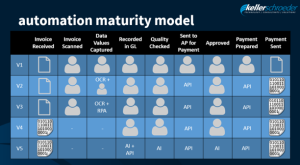
An AI strategy, then, starts with people and process maturity, aligned with digital transformation goals and key business objectives, and intentionally maps AI capabilities to the automation maturity curve. Done well, AI becomes a force multiplier, turning insight into action, curiosity into capability, and strategy into sustained advantage. Reach out to your Select Account Manager to schedule a briefing on how we can help you along your digital transformation (including automation with AI) journey.