You have business critical, homegrown, custom applications written in the RPG programming language that have reliably supported your business model for years. Now you find there’s a scarcity of RPG programmers and you fear the shortage will only get worse.
You are not alone.
The IBM i platform is used by a disproportionate number of large enterprises for critical business applications. According to respondents to FORTRA’s 2026 IBM i Marketplace Survey, just under half run more than 75% of their core business applications on IBM i even though they have other systems. In 2025, 91% of those companies using the IBM i platform utilize the RPG programming language. Most of those RPG applications are critical and homegrown. RPG remains the number one programming language used by IBM i shops.
Here’s an example of fixed format RPG as opposed to RPG free——–
English sentence: If X is less than 50, add 1 to a counter.
Fixed format RPG: 3 lines of code
- Put a ‘C’ in column 6
- Put ‘X’ in columns 18-19
- Put ‘IFLT’ in columns 28-31
- Put ‘50’ in columns 33-34
Next line
- Put ‘C’ in column 6
- Put ‘ADD’ in columns 28-30
- Put ‘1’ in column 33
- Put ‘COUNT’ in columns 43-47
Next line
- Put a ‘C’ in column 6
- Put ‘ENDIF in columns 28-32

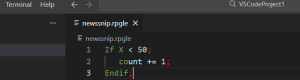
Here’s that same code written in RPG free:
if X < 50;
count += 1;
endif;
Here’s that same code written in C# (a well-established language widely used for new development):
if (x < 50)
{
count++;
}
Notice how similar the new RPG free is to other modern programming languages?
Converting old, fixed format RPG code to RPG free has become magnitudes easier with the advent of AI tools created specifically for the purpose of converting legacy RPG code to RPG free. Of note is IBM’s launch of Project Bob on March 24, 2026. Project Bob takes old RPG code and transforms it into modern, free-format RPG. As an added bonus, Bob can explain the code. This is extremely valuable since most legacy RPG systems have little or no documentation. If there is documentation, it’s often out of date and inaccurate.
Once your legacy code has been updated to RPG free, you’ve opened the door to a steady supply of programmers who can quickly learn it, understand it, and maintain it. AI coding assistants, available for all modern programming languages, are also available for RPG free. This makes it even easier to source programmers to maintain your business-critical processes written in RPG.
If you like this approach and want to take it beyond the basics of converting your program code from legacy RPG to RPG free, you can modernize even further now or at a later date:
- Green screens can be replaced with web-based GUI’s
- Monolithic code can be modularized and extracted as web services
- Some, or all, of your RPG applications can be migrated to the cloud
At Keller Schroeder we are focused on helping you understand the options available for meeting this challenge and supporting you as you implement your chosen option. Please reach out to your Select Account Manager or any member of our team to get started.
We’re here to help.